Adventure holiday gone wrong? What you need to know about waivers and your rights
Adventure holidays are no longer just for experienced thrill-seekers, activities are increasingly being marketed to everyday holidaymakers and first-time adventurers.
Promoted as guided mountain biking and off-road tours to horse riding, safaris and water sports, there is no shortage of experiences to choose from.
These activities are often labelled as professionally organised and carefully managed, with trained guides and safety measures in place. But if something goes wrong what are your legal rights?
A company may argue that you knew the activity was dangerous and accepted the risk. You may be told that you signed a waiver before taking part. Or you may be told that the company you booked your holiday with was acting as an agent for a separate local activity provider.
But does that mean you have no right to compensation? Not necessarily. The key question is whether reasonable care was taken to protect you from risks that could and should have been managed.
If the unexpected does happen, remember that taking part in an adventure activity doesn’t necessarily mean you have accepted responsibility for someone else’s failure to take reasonable care.
So, if you have an adventure activity booked, what should you know before you go?
Adventure doesn’t have to mean extreme
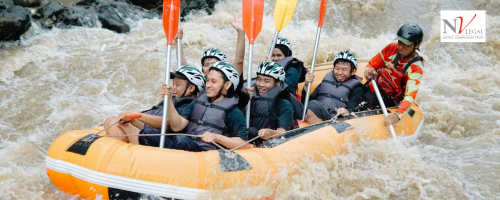
The phrase “adventure holiday” can conjure up images of para-gliding or white-water rafting, but adventure tourism covers a much wider range of activities.
You might book a cycling tour in Spain, take a guided trek in Greece, go horse riding in Costa Rica or join a kayak trip in Wales.
Some activities may look relatively straightforward but can still carry risks if they are poorly organised or supervised.
When you book an activity, you are entitled to expect that reasonable steps have been taken to keep you safe. That might include providing suitable equipment, giving appropriate instructions, checking the route and making sure the activity is suitable for the people taking part.
This is particularly important when an activity is being marketed to people who have little or no previous experience.
When an enjoyable experience goes wrong
An accident doesn’t automatically mean someone else is legally responsible.
Adventure activities naturally involve some risks. If you choose to go mountain biking, for example, you understand that you might fall off. If you go kayaking, you appreciate that you are going to be on the water.
But there is an important difference between accepting the ordinary risks of an activity and being injured because someone failed to take reasonable care.
Imagine booking a guided cycling excursion advertised as suitable for beginners. You might reasonably expect the organiser to choose an appropriate route, provide suitable equipment and give you adequate instructions.
If the route is unsuitable for inexperienced cyclists, the equipment is poorly maintained or the guide fails to provide appropriate supervision, an accident may be caused by something quite different from the ordinary risks you expected when you booked.
The fact that an activity is described as adventurous does not automatically mean that the organiser has no responsibility for your safety.
What about signing a waiver?
It is common for adventure activities to ask participants to sign a form before taking part.
You may be asked to confirm that you understand the risks or that you are fit enough to participate. Don’t assume that signing such a document means you have automatically given up your right to make a claim if something goes wrong.
The legal effect of a waiver or disclaimer depends on the circumstances, including where the accident happened, what you signed and which country’s laws apply.
If you have been injured, it is important not to assume that a form you signed at the beginning of an excursion means you cannot apply for compensation.
Was the activity part of your holiday?
Another important question can be how you booked the activity.
If you booked a holiday through a tour operator and the adventure activity was included in the holiday package, there may be additional protections available under the Package Travel and Linked Travel Arrangements Regulations 2018.
These regulations can be particularly important because a package holiday may include several different elements, such as accommodation, transport and activities.
The fact that an activity was provided by a local company does not necessarily mean the tour operator has no responsibility.
However, the precise arrangements matter. An activity that you independently found and booked after arriving at your destination may be treated differently from an excursion promoted and arranged by your holiday provider. This is one reason why keeping your booking information is so important.
Keep the details of your adventure
If you are planning an activity holiday, there are some simple things you can do before you travel that could be helpful if an accident occurs.
Keep copies of:
- Your holiday booking confirmation
- Details of any excursions or activities you have booked
- Emails and messages from the tour operator
- Information about the activity from the company’s website
- Safety instructions or information you were given
- Receipts and other booking documents
It can also be useful to take screenshots of online descriptions of activities before you travel. Marketing material can sometimes give an indication of how an experience was presented to customers, including whether it was described as suitable for beginners or particular age groups.
If an accident happens, take photographs of the location, equipment and anything else that may be relevant, provided it is safe to do so.
Make a note of what happened while the details are still fresh in your mind and, if possible, obtain the names and contact details of anyone who witnessed the accident.
Don’t let a holiday accident put you off your next adventure
Nobody wants to think about having an accident when they are planning their holiday. The point isn’t to avoid adventurous activities altogether. Far from it. A well-organised activity can be one of the highlights of a trip. It is simply worth remembering that being adventurous doesn’t mean accepting poor safety standards.
If an organiser markets an activity as professionally managed and suitable for holidaymakers, you should be able to expect appropriate care and attention to be taken when that activity is delivered.
And if you are injured because reasonable care wasn’t taken, you may be entitled to compensation.
What should you do after an accident abroad?
If you are injured while taking part in an organised activity abroad, report the accident as soon as possible and ask for a written record if one is available.
Get medical attention, even if you initially think the injury is minor. Some injuries can become more apparent in the hours or days following an accident.
Keep your medical records, receipts and any correspondence relating to the incident.
Most importantly, don’t assume that because the accident happened abroad, you cannot make a claim in the UK. International holiday accident claims can involve different rules depending on where the accident occurred, how the holiday was booked and the companies involved.
Getting advice from a solicitor, such as NV Legal, experienced in holiday and overseas accident claims can help you understand whether you may have a claim, and which legal rules apply.
If you have been injured on an organised activity or excursion abroad, we can advise you on your circumstances and explain whether you may be able to make a personal injury claim.
About NV Legal
We pride ourselves on our personal, hands-on approach. When you work with us, you won’t be passed between departments or left chasing updates. You’ll deal directly with one of our experienced solicitors, who will manage your claim and recovery pathway from start to finish.
If you need support, get in touch with NV Legal. It is not just about the claim; it is about helping you recover. We operate on a no-win, no-fee basis; you will not be charged if your claim is unsuccessful, and your case will only be managed by a qualified solicitor from day one.
Call – 03330 112 732
Email – info@nvlegal.co.uk
Website – nvlegal.co.uk
